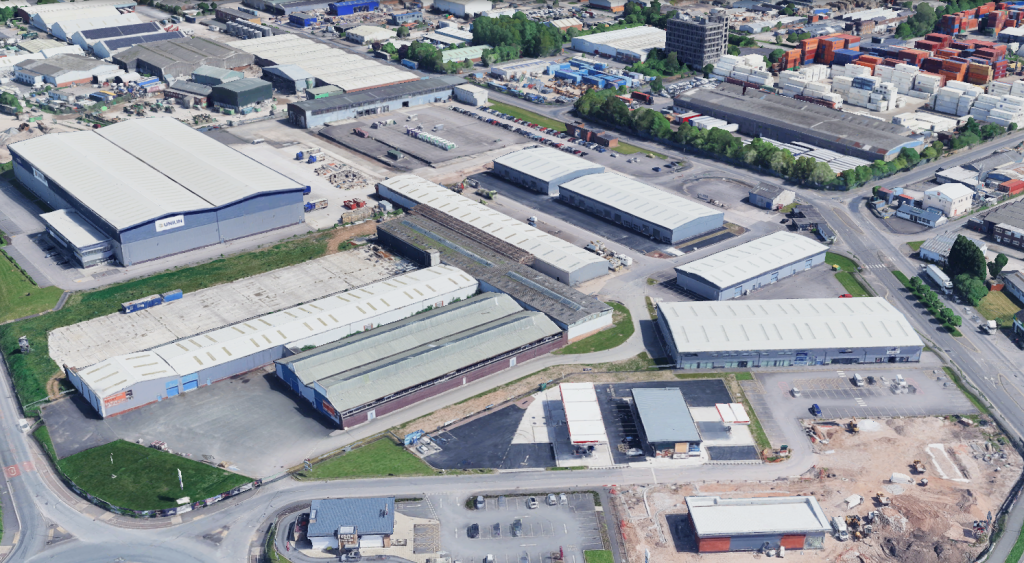
We were instructed to provide a series of valuation and cost-related opinions in respect of a mixed commercial property comprising office accommodation, industrial/workshop space, yard areas and associated land.
The instruction developed as the property changed through acquisition, redevelopment and subsequent occupation. This required the valuation purpose, basis and methodology to be reconsidered at different stages rather than applying a single approach throughout.
The work included opinions of Market Value and Market Rent together with separate assessment of executed works and works/cost analysis, depending on the purpose of each instruction.
The first stage was to define clearly what was being valued and why.
The property comprised different asset components and had undergone substantial redevelopment, including refurbishment and extension of office accommodation, alterations to industrial buildings, new services, thermal upgrades, replacement roofs and windows, and redevelopment of external service and parking areas.
The valuation work therefore drew on several sources of evidence:
The scope and methodology were aligned to the purpose of each instruction, with reference to the RICS Valuation – Global Standards, International Valuation Standards, RICS Black Book guidance, New Rules of Measurement and relevant cost-prediction standards.
For the property interest itself, the valuation adopted market and income approaches, considering comparable evidence, rental values, investment yields and the characteristics of the individual asset.
Separate analysis was required for the redevelopment works. This involved reviewing the building contract, pricing information, valuations, invoices and certificates, then benchmarking the recorded works against recognised construction cost data.
Historic and current construction costs were normalised by reference to regional factors, building-cost movements and tender-price indices so that the resulting opinion reflected the value of works undertaken rather than simply reproducing historic expenditure.
The asset evolved materially during the period of instruction. Office and industrial accommodation were refurbished and extended, while external areas were redeveloped to support the operational use of the site.
The valuation therefore had to reflect the property at the relevant valuation date rather than rely on its historic configuration.
Different instructions required different outputs. Earlier work included Market Value, Market Rent and valuation of executed works, while later instructions focused specifically on executed works and works/cost analysis rather than Market Value.
This distinction was central to the instruction. The appropriate basis and method were determined by the purpose of the valuation rather than by the property type alone.
Inspection was undertaken to the extent necessary for valuation purposes, with clear distinction between a valuation inspection and a building or structural survey.
The accommodation was measured using the applicable RICS measurement basis, with office, industrial and external areas separately identified to support the valuation analysis.
The interest being valued was a long leasehold interest, requiring consideration of the tenure, lease terms, title assumptions and associated rights.
Planning history and changes to the Use Classes Order were also relevant because the range of permissible commercial uses influenced both marketability and valuation assumptions.
The redevelopment element required review of JCT contract documentation, drawings, pricing information, interim valuations, invoices and certificates.
This allowed the valuation of executed works to be tested against both the contractual evidence and current construction-cost benchmarks.
The valuation work provided a structured basis for assessing a changing commercial asset across different stages of ownership, redevelopment and occupation.
By separating Market Value, Market Rent and executed-works analysis where appropriate, the reports avoided treating different valuation questions as though they were interchangeable.
The result was a series of valuation opinions grounded in the relevant property interest, valuation purpose, inspection evidence, market conditions, redevelopment information and professional standards applicable at each valuation date.
Complex commercial valuation is often less about applying a difficult calculation and more about defining the instruction correctly.
The valuer must establish:
Where a property is undergoing redevelopment, those questions become even more important. Market evidence, rental analysis, construction costs and contract documentation may all be relevant, but they answer different questions.
The strength of the valuation lies in selecting and applying the correct evidence and methodology to the defined purpose of the instruction. This approach underpins our wider commercial property valuation and advisory work.

